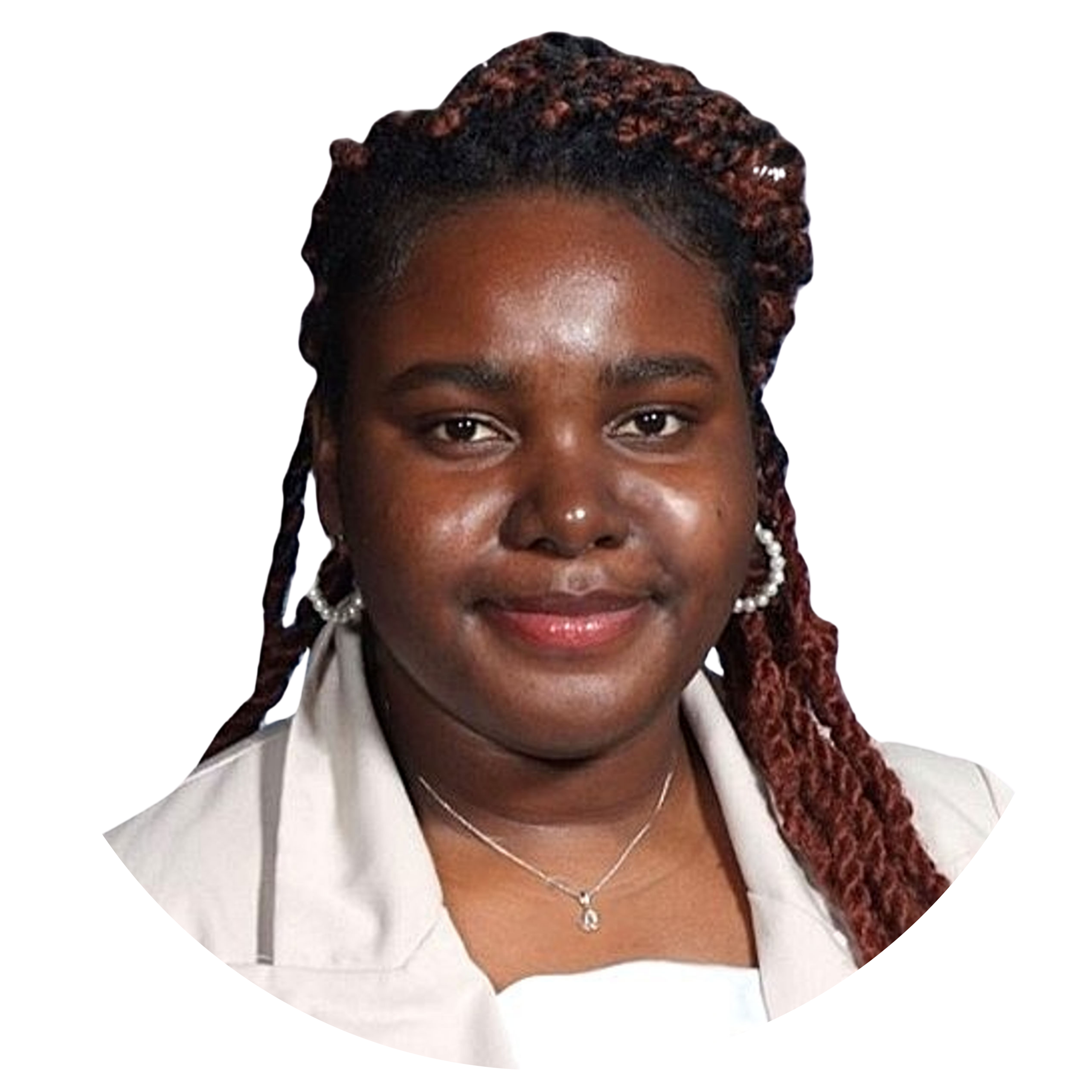
Precious Williams, MPH is a global health researcher, lead implementing data analyst, and science communicator committed to advancing maternal and child health in under-resourced communities. At The George Washington University, she leads analysis for the ReMAPP study (Redefining Maternal Anemia in Pregnancy and Postpartum)—a high-impact, multi-country initiative aimed at establishing new clinical standards for diagnosing anemia in pregnancy. Her work is shaping global policy by linking hemoglobin thresholds to maternal and newborn outcomes across low- and middle-income countries. Passionate about capacity building, Precious has led training programs in Zambia and Ghana on data management, mentored junior analysts in epidemiological methods, and contributed to the harmonization of large-scale health datasets across global research networks.
Her research and reporting have been accepted for presentation at major conferences such as the American Public Health Association (APHA) Annual Meeting and the International Congress of Nutrition. As a Pulitzer Center Global Health Fellow, she investigated the impact of urban flooding on disease eradication efforts in Lagos, Nigeria—producing a widely shared photojournalism series that highlighted the intersection of climate change, infrastructure, and public health.
Precious also brings experience from top global health organizations, including Chemonics International and PAI, where she supported initiatives on universal health coverage and global health supply chains. With certifications in epidemiology, public health ethics, and mortality surveillance—and technical fluency in R, SAS, and data visualization—Precious champions evidence-based solutions that elevate equity, amplify community voices, and translate complex data into real-world change.
Personal Statement
I entered public health to address the root causes—not just the symptoms—of health inequities. What began as a background in microbiology has evolved into a career at the intersection of data, advocacy, and global systems change. With an MPH from The George Washington University, I’ve dedicated my work to improving maternal and newborn health, challenging outdated standards, and amplifying the lived experiences of communities too often excluded from public health conversations.
Currently, I serve as the Lead Implementing Analyst on the ReMAPP Study (Redefining Maternal Anemia in Pregnancy and Postpartum) at The George Washington University. Our goal is to redefine hemoglobin thresholds and diagnostic criteria for anemia in pregnant and postpartum women using robust, multi-country datasets from underrepresented populations in Ghana, Kenya, India, and Zambia.
My role spans complex data harmonization to building statistical models that directly inform new global standards. I collaborate with international partners to ensure accuracy, contextual understanding, and knowledge transfer. This work centers equity by challenging outdated, exclusionary clinical norms and providing data that reflects the diversity of maternal physiology across low- and middle-income countries (LMICs). Our findings—already accepted for presentation at the International Congress of Nutrition—contribute to a growing body of evidence aimed at transforming global maternal health policy.
Beyond data, I believe in the power of narrative to drive change. As a Pulitzer Center Global Health Reporting Fellow, I conducted a solo investigative project titled The Drainage System That Stands in the Way: Seeking Disease Eradication in Lagos. Growing up in flood-prone Lagos communities, I witnessed how infrastructure failures perpetuate disease outbreaks. My photojournalism project combined community interviews with visual documentation to expose how poorly designed drainage systems fuel malaria, cholera, and other preventable illnesses.
What made this project meaningful wasn’t just the story—it was the audience. I interviewed residents of underserved neighborhoods like Makoko, Ketu, and Maza Maza, mapping the flow of polluted water into homes and capturing how families are forced to normalize illness. By pairing these narratives with public health data, I advocated for structural approaches to disease eradication. This storytelling aligns with BCPH’s vision—to center those most impacted by inequities and to ensure public health is as human as it is scientific.
Throughout my career, I’ve prioritized cross-border capacity building. I’ve led data trainings in Zambia and Ghana, mentored early-career analysts in epidemiology and visualization, and served as an Instructional Assistant for a graduate-level Global Infectious Disease course. My technical toolkit includes R, SAS, Stata, and Power BI, but my most critical tool is my commitment to ethical, community-rooted research.
Previous roles at Chemonics International and PAI/PHCPI deepened my focus on equity. Supporting USAID’s global supply chain and designing primary healthcare measurement tools taught me how systems shape access—and how equity must be intentionally embedded in policy and implementation. These experiences honed my systems-thinking approach and reinforced my dedication to health equity in under-resourced settings.
What unites my work—whether analyzing maternal health data, reporting on environmental risks, or mentoring peers—is a drive to make public health more just, inclusive, and actionable. I don’t just study disparities; I work to eliminate them. That’s what the BCPH 40 Under 40 Award represents: a commitment to catalytic leadership grounded in equity and social justice.
As I look ahead, I’m eager to expand my impact—particularly in reimagining global health systems that prioritize equity in care and accountability. I would be honored to be considered for this award and remain steadfast in using every tool—data, narrative, and action—to build a healthier, more equitable world.
Honorees selected for the Health Innovators to Watch Awards come from across the globe, representing health and healthcare innovation in traditional public health fields, research, academia, architecture, and more. In addition, innovators are intentionally diverse in backgrounds, from public health founders and co-founders, inventors, national and international leaders, directors, researchers, academicians, and curriculum developers