Biography
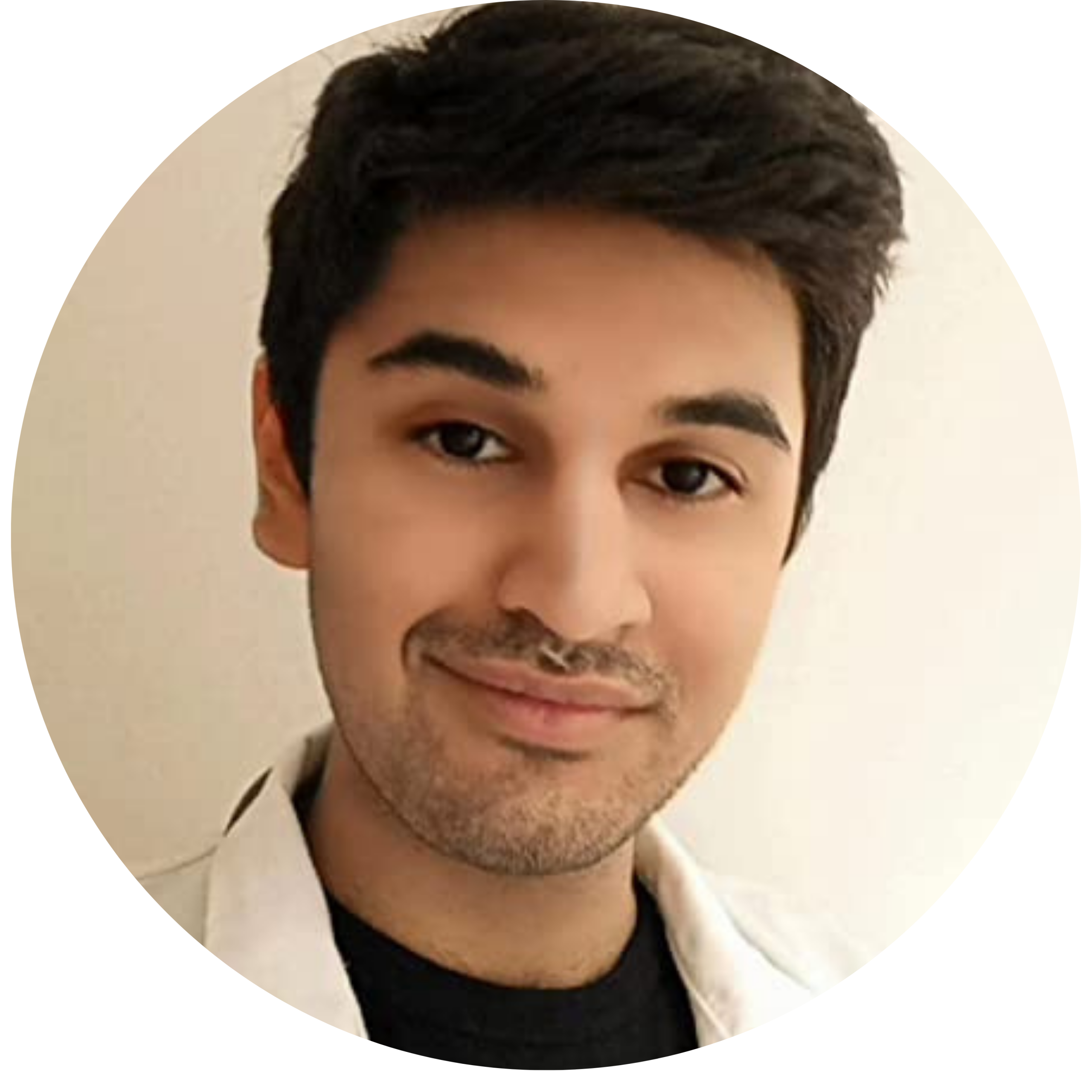
Muhammad Hamza Shah, MSc (Edin) is a final-year medical student at Queen’s University Belfast and emerging global health advocate whose work bridges clinical medicine, conflict studies, and bioethics to address the unmet health needs of immigrant and refugee populations. With over 40 peer-reviewed publications and 5 academic book chapters, he has led and contributed to interdisciplinary research on health inequities in conflict zones, the ethics of care in war-affected settings, and the structural barriers facing displaced individuals with disabilities. His work also includes published correspondences in The Lancet calling for deeper physician engagement in politics and health policy, especially in humanitarian crises.
A central achievement in his advocacy is the development of a psycho-socio-educational framework to address disability gaps among immigrant and refugee communities—a model recognized for its practical integration of trauma-informed, culturally responsive care. Muhammad is also the founder of the Bioethics and Medical Humanities Initiative, a transdisciplinary network advancing dialogue and scholarship on ethical care in contexts of displacement, marginalization, and conflict. He is currently authoring a SpringerBriefs book titled Cancer, Disability, and the Gaps in Care: A Multidisciplinary Perspective, which explores the global disconnect between oncology and rehabilitation services—particularly in under-resourced or conflict-affected contexts.
Beyond his academic contributions, Muhammad has engaged directly with refugee health initiatives, and mentors students from marginalized and international backgrounds, aiming to democratize access to research and advocacy platforms. Drawing on his own multilingual and multicultural background, he approaches healthcare through the lens of lived experience and global solidarity. Recognized for his leadership and critical inquiry, Muhammad seeks to build systems of care that are not only clinically sound but ethically just—ensuring that no patient is left behind due to war, occupation, or structural violence. As a future clinician-researcher, he envisions a practice rooted in social medicine, global oncology, and sustained community partnership
Personal Statement
When I was a child growing up in Pakistan, inequity wasn’t a theory—it was the backdrop of everyday life. I saw relatives forgo treatment because they couldn’t afford transport to the nearest hospital. I watched neighbors ration medication, turn to informal healers, or simply resign themselves to suffering because they lacked the “right” documents. Health, in my community, was less a right and more a privilege—determined not by need, but by class, status, and political belonging. These early experiences left a deep imprint on me. I learned early on that illness was never just biological—it was shaped by borders, policies, and power. That realization has driven everything I’ve done since: from my medical training and academic research to the frameworks I’ve built and the communities I’ve tried to serve.
I believe health innovation begins not with technology, but with a question: “Whose suffering goes unseen?” My work is an ongoing response to that question. I have authored over 40 peer-reviewed articles and multiple book chapters interrogating how health systems—especially in contexts of conflict, migration, and post-colonial inequality—often fail the very populations they claim to serve. In doing so, I’ve sought to push beyond traditional global health narratives and ask harder questions about accountability, complicity, and whose knowledge counts in the design of care. One of my core contributions has been the creation of a psycho-socio-educational framework to address disability gaps among displaced communities, developed in response to my clinical encounters with refugee patients navigating both trauma and systems that were never built for them. This framework integrates trauma-informed care, culturally rooted psychoeducation, and upstream policy engagement. As I wrote in the framework’s conclusion:
“As we move forward, the adoption of this framework signifies a collective commitment to building a fairer, more inclusive world where all individuals, regardless of their backgrounds, can flourish.”
As outlined before, this belief in repair—of systems, stories, and epistemologies—drives much of my work. Currently, I’m writing a book for SpringerBriefs in Medicine titled Cancer, Disability, and the Gaps in Care: A Multidisciplinary Perspective. It investigates the gaping divide between cancer treatment and post-treatment rehabilitation in low-resource and conflict-affected settings. The project emerged from a simple, uncomfortable question I kept encountering during my clinical placements: What happens to the refugee patient after the chemotherapy ends? Too often, the answer is: nothing. My book argues for a reimagined model of survivorship care that includes rehabilitation, social reintegration, and disability rights—especially in humanitarian and post-conflict regions.
I am also the founder of the Bioethics and Medical Humanities Initiative, a network dedicated to exploring justice-oriented approaches to care through interdisciplinary scholarship. Through this initiative, we host seminars, publish collaborative work, and mentor underrepresented students—particularly those from conflict-affected backgrounds—who wish to enter the world of global health ethics. We ask critical, and sometimes uncomfortable, questions: What does ethical care look like in a refugee camp? What does “do no harm” mean when the state is the source of harm? For me, innovation lies in creating spaces where such questions can be asked without apology.
At the same time, I’ve also used my voice to challenge the longstanding culture of silence in medicine around political engagement—especially in contexts of structural violence. In my published correspondence in The Lancet, I critiqued the prevailing view that political neutrality is synonymous with medical professionalism. Drawing on the humanitarian crisis in Gaza, I wrote:
“Medical neutrality cannot be divorced from its ethical implications… Physicians are also moral agents with the right to follow their conscience, as long as it does not harm others.”
This piece argued that the destruction of healthcare infrastructure and targeted violence against aid workers in Palestine demands not just clinical concern but moral clarity. It was a statement of principle as much as practice: that medicine, at its core, is a political act—especially when lives are stratified by race, citizenship, and occupation.
Beyond writing and research, I have engaged directly with communities—registering ethnic minorities to stem cell registries through Belfast Marrow, shadowing clinics serving Syrian and Rohingya refugees, and co-developing culturally responsive health education resources for immigrant populations navigating cancer care. These experiences have taught me that health equity cannot be abstract. It must be built in real time, with real people.
The Boston Congress of Public Health’s mission to center equity, antiracism, and justice resonates deeply with my vision of innovation. In a world where public health is increasingly defined by metrics, I believe it is just as important to ask: Whose voice is missing from the table? What histories are left out of our interventions? My work aims to reinsert these voices, histories, and ethics back into the heart of health innovation. My long-term vision is to build a career at the intersection of global oncology, migration health, and ethics, where I can design and advocate for systems that are not only clinically sound but culturally responsive and politically aware. As I move forward, I remain guided by the same principle that began this journey: that to innovate in health is not merely to invent—but to witness, to reflect, and to respond. Being selected for the Health Innovators to Watch list would be more than an honor—it would be an affirmation that justice-centered public health is not just possible, but essential. I hope to join a community of changemakers who, like me, believe that health systems must not only treat disease but confront the deeper wounds of injustice from which it arises.
Honorees selected for the Health Innovators to Watch Awards come from across the globe, representing health and healthcare innovation in traditional public health fields, research, academia, architecture, and more. In addition, innovators are intentionally diverse in backgrounds, from public health founders and co-founders, inventors, national and international leaders, directors, researchers, academicians, and curriculum developers