Did You Know: On December 23, 2022, Royal Dutch Shell agreed to pay four Nigerian farmers and their communities $16m in compensation over harmful pollution caused on their lands. Shell had resisted the farmers’ claims for over 15 years.
Welcome to my Public Health Thought Leadership Series, where I will discuss the theme, “The Climate Crisis Is a Health Crisis”, with experts across diverse public health fields.
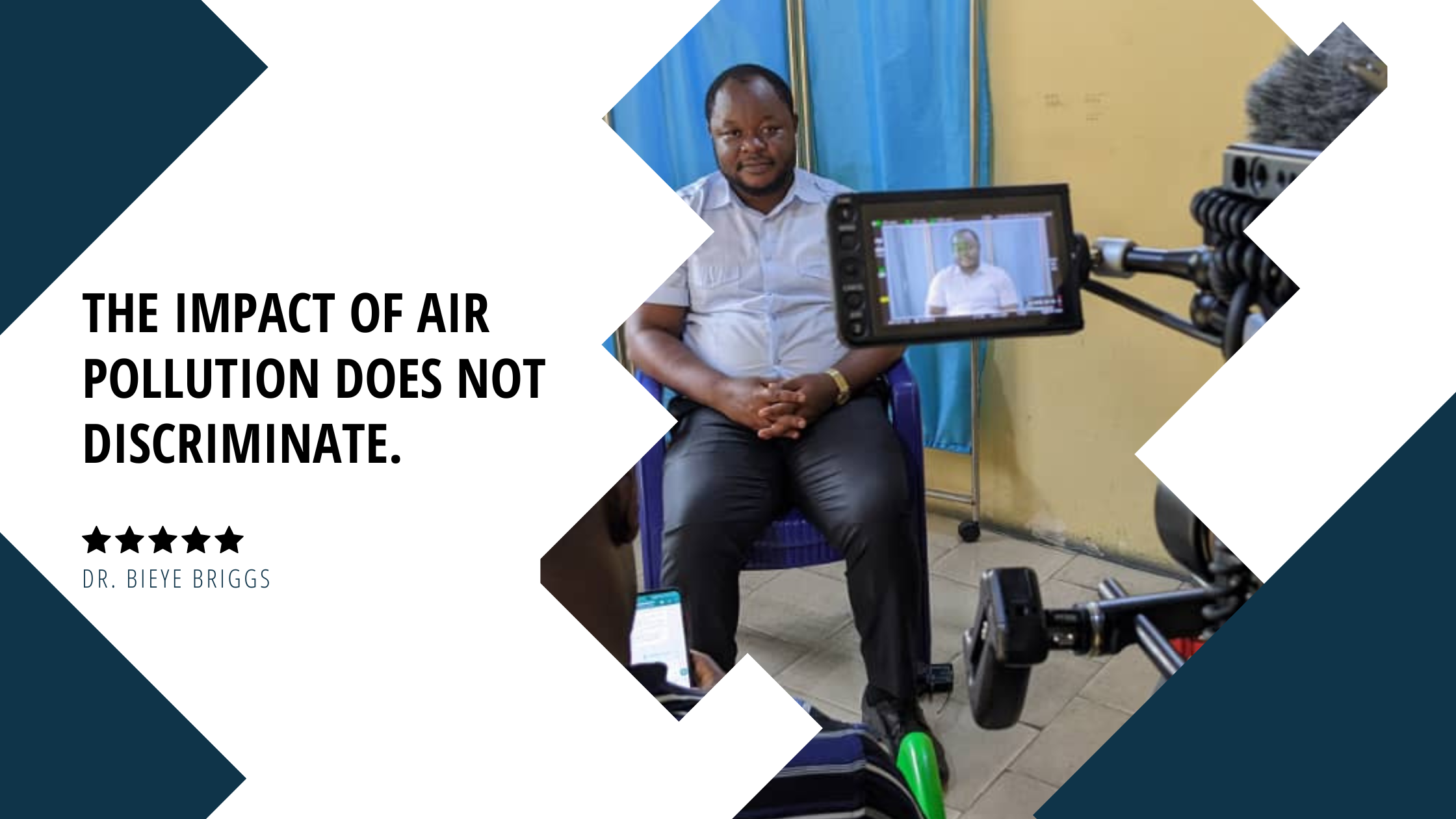
Today, our guest is Dr Bieye Renner Briggs, a Nigerian public health physician and an environmental advocate based in Port Harcourt, southern Nigeria. He is the Executive Director of the Centre for Environmental and Public Health (CEPH), a platform he uses to raise awareness of the health impacts of the soot ravaging his hometown of Port Harcourt. On December 14, 2021, he discussed the health consequences of soot on a live radio broadcast that led the state governor to declare a “state of emergency on soot” two weeks later.
Now, to the topic of the day.
In 1956, oil was discovered in Nigeria within its Niger Delta region, and Shell handled the early operations. This marked the start of a vicious cycle of oil exploration in the region.
Ogoniland, one of the Niger Delta communities where Shell operated, suffered significant environmental pollution caused by oil spills and uncontrolled gas flaring.
In response to the environmental consequences, the Movement for the Survival of the Ogoni People (MOSOP), led by Nigerian writer and social activist Ken Saro-Wiwa, emerged.
Saro-Wiwa and his group brought international attention to the Ogoni cause and advocated for their rights. The group’s activities did not go down well with Nigerian leaders and the oil company, who were more interested in profits than the people’s health.
Eventually, Shell colluded with the Nigerian government in the “judicial murder” of Saro-Wiwa in Port Harcourt, a city in the Niger Delta region.
In 2011, almost 16 years after Saro-Wiwa’s execution, the United Nations Environment Programme released a report of its environmental assessment of Ogoniland that justified the earlier protests by Saro-Wiwa and his group.
The investigators found benzene in all air samples taken in Ogoniland, with concentrations ranging from 0.155 to 48.2 µg/m3. About 10% of the detected benzene levels exceeded the concentrations considered to pose a 1 in 10,000 cancer risk, as ranked by the WHO and the United States Environmental Protection Agency (USEPA).
In the absence of stringent laws to regulate oil exploration, pollution in the Niger Delta region has worsened. Port Harcourt, the “commercial nerve center of oil and gas exploration”, has been christened “soot city” because of its protracted battle with black soot—a product of incomplete combustion of hydrocarbons.
Studies in Port Harcourt have shown an increase in the prevalence of birth defects, male-pattern infertility and acute respiratory tract infection in children under five. A 2021 investigation revealed that the soot situation increased mortality and morbidity rates by 30%.
In this interview, I sat down with Dr Briggs to discuss how Port Harcourt has become a poster child for air pollution around the world and the health consequences of the soot as evidenced among residents of Port Harcourt:
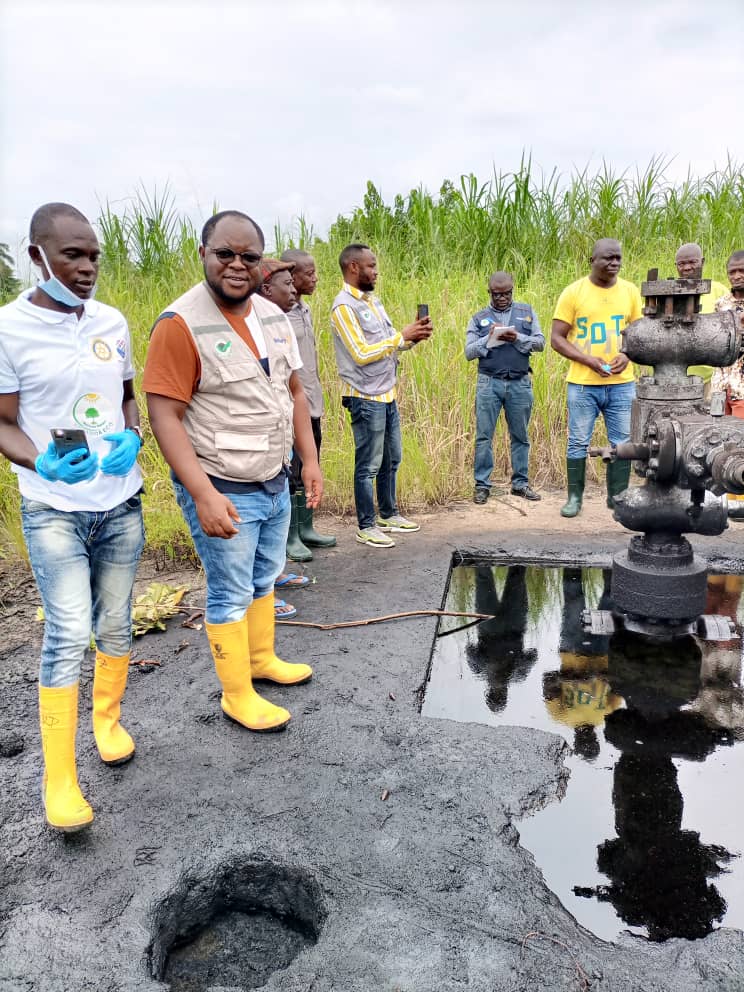
We first noticed the soot in the later part of 2016, but it was not until 2017 that the observation became more evident all across the Port Harcourt metropolis. So people started talking about it.
When you wake up in the morning, you see black substances deposited on your floors, cars, and clothes. Even when you brush your teeth in the morning, the first phlegm you bring out is black, not looking black, but black.
The residents of Port Harcourt came together and started the campaign under the hashtag #StopTheSoot. It was people-oriented and wasn’t sponsored by anyone. Under the campaign, we carried out protests, and held conferences and symposiums.
Some of our members were threatened by the government, alleging that we were being sponsored by detractors of the government and opposition political parties to demarket the state.
The #StopTheSoot campaign trended globally and drew the attention of the world.
Atmospheric particulate matter comes in different dimensions, ranging from PM10 to PM2.5. PM2.5 is referred to as fine particulate matter with a diameter of 2.5 micrometers and smaller. The combustion of oil and other fossil fuel products gives rise to this pollutant.
Soot falls under PM2.5. The particles are so small you cannot see them without an electron microscope.
Now, let’s talk about our respiratory system. We have tiny hairs inside our nostrils that trap large particulate matter and prevent them from entering our lungs. Beyond the nostrils, the internal lining of the respiratory system has cilia that propel mucus to expel particles that make it past the nostrils. This is the body’s way of preventing foreign bodies from getting into the alveoli, where gaseous exchange occurs between the lungs and blood.
And this is where soot becomes a serious threat to public health. Because it’s so small, it can bypass all these natural defenses and enter the alveoli.
Physiologically, when deoxygenated blood reaches the lungs, it releases carbon dioxide and takes up oxygen. The oxygen is then carried to the heart, which pumps it to the rest of the body. But in the presence of carbon, the red blood cells pick up carbon instead of oxygen and distribute it throughout the body’s tissues. Over time, this carbon deposition in the cell nuclei leads to various health problems associated with soot.
Health implications from the soot can be immediate or long-term. The former include skin irritation, conjunctivitis, acute bronchitis, pneumonia, and even nausea and vomiting from irritation of the gastrointestinal system.
From what I’ve observed, it seems that out of every ten patients I see, about seven end up with upper respiratory tract infections. Additionally, a 2018 study in Port Harcourt showed a rise in respiratory tract infections among children under five.
In the long term, soot affects the heart, kidneys, and liver and can cause cancer. This soot also affects pregnancy and leads to adverse birth outcomes such as low birth weight, preterm delivery and congenital malformations.
A 2017 study revealed a significant increase in major birth defects in Port Harcourt. The prevalence was found to be 20.73 cases per 1,000 live births, much higher than the figures observed in other areas of Nigeria.
A colleague of mine, an anesthetist at the University of Port Harcourt Teaching Hospital, participated in the surgery for a 21-year-old male patient. The patient required general anesthesia, which involved temporary paralysis of the respiratory muscles. To ensure proper breathing during the surgery, they performed endotracheal intubation.
While inserting the endotracheal tube into the patient’s windpipe, they discovered black soot deposits in his lungs. Remarkably, the patient had never smoked in his life.
If you pick up a cigarette pack, it is clearly written that smokers are at risk of dying young. But smokers don’t actually smoke every single hour of the day because there are times when they’re sleeping or busy with other activities that don’t permit them to smoke. Now imagine the situation in Port Harcourt, where residents have continuously inhaled soot, day and night, for the past seven years.
Health implications from the soot can be immediate or long-term. The former include skin irritation, conjunctivitis, acute bronchitis, pneumonia, and even nausea and vomiting from irritation of the gastrointestinal system.
From what I’ve observed, it seems that out of every ten patients I see, about seven end up with upper respiratory tract infections. Additionally, a 2018 study in Port Harcourt showed a rise in respiratory tract infections among children under five.
In the long term, soot affects the heart, kidneys, and liver and can cause cancer. This soot also affects pregnancy and leads to adverse birth outcomes such as low birth weight, preterm delivery and congenital malformations.
A 2017 study revealed a significant increase in major birth defects in Port Harcourt. The prevalence was found to be 20.73 cases per 1,000 live births, much higher than the figures observed in other areas of Nigeria.
A colleague of mine, an anesthetist at the University of Port Harcourt Teaching Hospital, participated in the surgery for a 21-year-old male patient. The patient required general anesthesia, which involved temporary paralysis of the respiratory muscles. To ensure proper breathing during the surgery, they performed endotracheal intubation.
While inserting the endotracheal tube into the patient’s windpipe, they discovered black soot deposits in his lungs. Remarkably, the patient had never smoked in his life.
If you pick up a cigarette pack, it is clearly written that smokers are at risk of dying young. But smokers don’t actually smoke every single hour of the day because there are times when they’re sleeping or busy with other activities that don’t permit them to smoke. Now imagine the situation in Port Harcourt, where residents have continuously inhaled soot, day and night, for the past seven years.
The #StopTheSoot campaign did have an impact, albeit briefly. In 2017, when we organized our first protest, state officials took the matter to the governor. And they discussed it in the State Executive Council.
As a result, a technical committee was established to investigate the sources of the soot. After several months of investigation, the preliminary report revealed two main sources of the soot in Port Harcourt: artisanal crude oil refining and gas flaring by both foreign oil companies and illegal miners.
In response, the governor declared a state of emergency on artisanal crude oil refining. Additionally, he formed a task force to destroy the makeshift refining sites in the city and its environs. As a result, the soot concentration significantly decreased in the following months.
The problem gradually resurfaced as security measures waned. However, the soot is now less severe than before.
Joining the #StopTheSoot campaign has made me more passionate about the environment. The extent to which environmental pollution is relevant is to the extent that it adversely affects public health.
This passion led me to establish the Center for Environment and Public Health (CEPH). Through this organization, we look to raise awareness about the negative and positive consequences of human activities on the environment.
As a public health physician and medical doctor, I feel a strong civic responsibility to raise my voice against the health implications of soot. My goal is to urge the government to take proactive measures and protect the well-being of the people.
In my opinion, air pollution caused by oil and gas exploration is the most devastating form of pollution attributable to oil and gas exploration. The reason is simple: air is dynamic, we all breathe the same air.
The impact of air pollution does not discriminate. Hence everyone must rise up and take action.
We have to end activities that give rise to soot and other pollutants, not just for ourselves but for the next generation’s sake. They need a healthy environment where they can thrive and pursue their dreams.
*The WHO estimates that the combined effects of ambient and household air pollution are associated with 6.7 million premature deaths annually.
The mission of the Boston Congress of Public Health Thought Leadership for Public Health Fellowship (BCPH Fellowship) seeks to:
It is guided by an overall vision to provide a platform, training, and support network for the next generation of public health thought leaders and public scholars to explore and grow their voice.