Biography
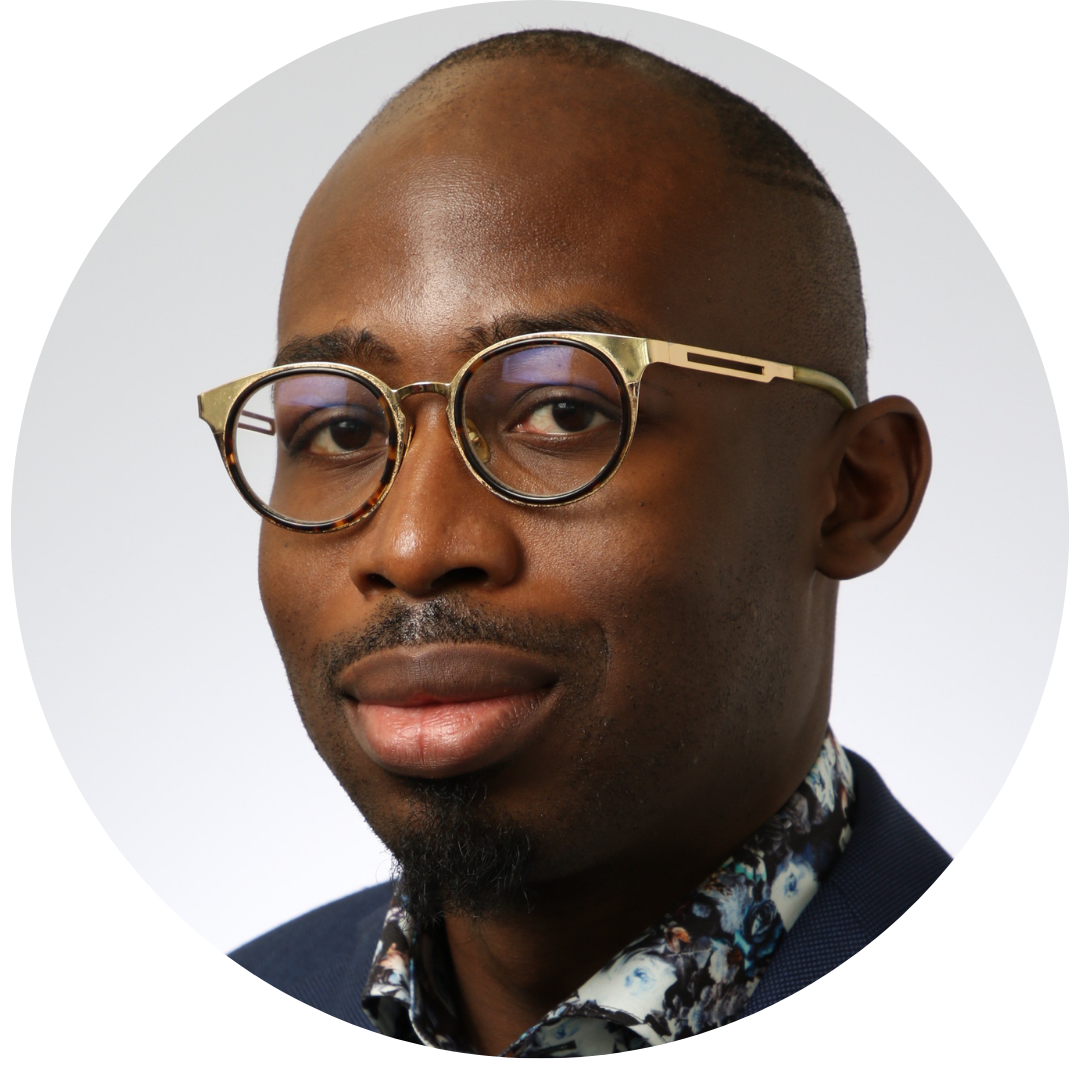
Victor Ekuta, MD is a Nigerian-American physician-scientist, neurology resident at Morehouse School of Medicine—and the first Black male to hold that position—as well as a passionate health equity advocate. His career bridges neuroscience, public health, and social justice, driven by a commitment to reimagine innovation not just by what it builds, but by whom it serves.
His work centers on racial disparities in neurodegenerative disease diagnosis and advancing inclusive innovation in medicine. As a Health Equity Scholar with the Alzheimer’s Disease Neuroimaging Initiative (ADNI) and former MIT linQ Catalyst Fellow, Dr. Ekuta has led research examining racial bias in pulse oximeters and underrepresentation in Alzheimer’s biomarker studies. In 2019, he joined over 100 global experts in contributing to Trust or Consequences 2040: Will Innovations in Health and Medicine Deliver? as a Trust Colab participant.
His science communication has been featured by Cell, Doximity, and the Boston Congress of Public Health.
Dr. Ekuta earned a BA in Biology and Philosophy-Neuroscience-Psychology from Washington University in St. Louis on a full scholarship, where he also mentored young Black students through St. Paul Saturdays, a leadership and development nonprofit.
For his work advancing health equity and innovation, he has received numerous national honors, including the 2025 AMA Excellence in Medicine Award, 2025 Rock Health Top 50 in Digital Health (Equity Advocate), 2025 Cell Press Rising Black Scientist Award, 2023 Boston Congress of Public Health 40 Under 40 Catalyst Award, and the 2021 AMSA Racial Justice in Medicine Award.
He plans to specialize in academic neurology as a physician-scientist-advocate, working to treat brain disease, dismantle health disparities, and champion diversity in science and medicine.
Personal Statement
I was born in Nigeria and raised across multiple U.S. states—Mississippi, Tennessee, Ohio, Connecticut, and Pennsylvania—constantly adapting, constantly observing. I carried the pride of my Nigerian heritage with me, but I quickly learned that the world did not always see me the way I saw myself. In classrooms and clinics, I navigated systems where my identity was often perceived as a barrier rather than a strength. These early experiences shaped not only my worldview but also my lifelong commitment: to transform the very structures that produce inequity in medicine and public health.
As a physician-scientist and neurology resident, I have dedicated my career to advancing health innovation rooted in equity and justice. I initially believed science to be an equalizer—objective, precise, apolitical. But I soon came to understand that even the most sophisticated medical tools can encode bias, and even the most promising innovations can deepen disparities if they are not designed with inclusion in mind. This realization reframed my approach to medicine: I no longer see innovation as a matter of what we build, but for whom—and with whom—we build it.
One example of this is my work on racial disparities in Alzheimer’s disease. Black Americans are twice as likely to develop Alzheimer’s yet are dramatically underrepresented in clinical trials. This underrepresentation skews biomarker development, impairs diagnostic accuracy, and contributes to delayed care for those most at risk. As a Health Equity Scholar with the Alzheimer’s Disease Neuroimaging Initiative (ADNI), I investigate how standard neuroimaging biomarkers may perform differently across racial groups, and advocate for research practices that prioritize inclusion from study design through dissemination. My goal is not just to diagnose disease more accurately, but to dismantle the structural blind spots that keep certain communities invisible in our science.
Similarly, during the COVID-19 pandemic, I investigated racial bias in pulse oximeters—devices that systematically underestimate oxygen saturation in patients with darker skin tones. As a MIT linQ Catalyst Healthcare Innovation Fellow, I analyzed this “systemic racism in miniature” and advocated for device reform grounded in inclusive design. The experience reaffirmed a core belief: Health innovation must be judged not only by its novelty or efficiency, but by its capacity to reduce harm, restore trust, and repair historical injustices.
My work aligns deeply with the mission of the Boston Congress of Public Health (BCPH). BCPH understands that innovation is not value-neutral. Public health solutions must be shaped by the communities they serve and informed by histories they cannot afford to ignore. My approach is grounded in that same philosophy. I define innovation broadly—not just as the development of new technologies, but also as the reimagining of research frameworks, care models, and narratives to center equity and justice.
One of the most powerful tools for transformation, I believe, is storytelling. Too often, marginalized communities are framed solely through deficit-based narratives—defined by disease prevalence rather than resilience, brilliance, or contribution. Through my science communication work, including published essays for Cell, Doximity, and the Boston Congress of Public Health as well as through efforts to mentor others as a BCPH Master Editor, I strive to tell fuller, more human stories. Stories that reflect not only the structural barriers communities face but also the strength with which they meet them. Stories that challenge us to ask not just what is wrong but what has been done wrong—and how we make it right.
This work is personal. I’ve witnessed loved ones endure the challenges of brain disease. I am the son of a mother battling Alzheimer’s Disease. I have watched my family—immigrants navigating an unfamiliar system—grapple with delayed diagnoses, fragmented care, and implicit bias. As a clinician, I translate textbook definitions into patient-centered understanding. As a researcher, I interrogate the very tools that once failed my own family. In doing so, I’ve found my place—not only as a neurologist in training, but as a son, a scholar, and an advocate determined to bring light to the dark corners of medicine.
Looking ahead, I plan to continue advancing equitable neurotechnologies, building inclusive research infrastructure, and mentoring the next generation of diverse physician-scientists. I want to help shape a future in which inclusion is the default, not the exception. A future in which our innovations are judged not solely by their impact on the privileged few, but by their ability to close gaps and heal divides. This is the kind of future that BCPH is building—and it is one I want to be part of.
In summary, my background as a Nigerian-American physician-scientist, my commitment to equity-driven research, and my belief in the power of narrative all converge around a singular mission: to ensure that the tools of modern medicine work for all of us. I am proud to stand at the intersection of health innovation and social justice. And I am eager to partner with BCPH in reimagining public health not just as a system of care—but as a force for liberation.
Honorees selected for the Health Innovators to Watch Awards come from across the globe, representing health and healthcare innovation in traditional public health fields, research, academia, architecture, and more. In addition, innovators are intentionally diverse in backgrounds, from public health founders and co-founders, inventors, national and international leaders, directors, researchers, academicians, and curriculum developers