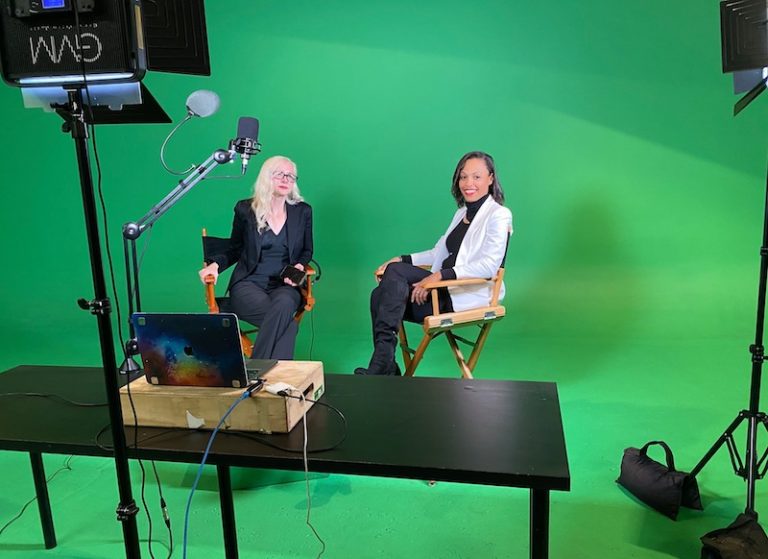
I’m creating a series exploring the relationship between community and public health institutions, with a particular focus on trust. We depend on public health institutions and decision-makers to create and maintain systems that protect and improve the health of the population. Without these institutions, it would be impossible to predict, prevent, or respond to illnesses impacting populations. However, not all people benefit from public health equally.
I’m starting with an explanation of this dynamic relationship, using COVID-19 pandemic as an example. If we learned anything during the COVID-19 pandemic, it is that our health is intricately connected with the health of other members of our community. Because of this fact, it is vitally important that communities can trust public health information and interventions enacted by public health institutions.
On March 15 2020, the country completely changed within a matter of hours when the first reported cases of COVID-19 reached the U.S. I remember being at work, at around 2:00 pm, when I was instructed to use N-95 masks and airborne pathogen protocols for the remainder of the week. That first mask mandate was followed by the unprecedented nationwide shutdown. At the time, I was working as a peer educator at an HIV clinic in Kansas City MO.
I had dedicated much of my professional and academic career to understanding public health in the context of HIV, especially as it pertains to the health and human rights of people living with HIV. I was familiar with the bureaucracies involved in resource allocation and planning for HIV services, and the reality that Black men who have sex with men remain at the most at risk for HIV despite many scientific advancements. So, it came as no surprise that Insidence and prevalence trends quickly began to mirror those of the HIV epidemic.
Two dominant narratives emerged as it pertains to COVID-19 incidence: vulnerability and irresponsibility. On the one hand, elderly populations, and those living with chronic illness were believed to be especially vulnerable to severe outcomes if exposed to COVID-19. Those who made frequent trips outside of their home or entered public spaces, however, were considered irresponsible.
The reality is less binary. For what it’s worth, I think that implementation of physical distancing was fairly successful. By no means am I saying that 113 million deaths and more than 150 million cases attributed to COVID-19 are acceptable, but given the circumstances, things could have been much worse. The fact is, the country was unprepared for such a shift in the way that we all live.
The pandemic reenforced the impact of structural vulnerabilities that many of us already knew existed, keeping marginalized communities at risk for communicable diseases. In addition, the political environment in the wake of George Floyd and others lost to state-sponsored violence, coupled with a widening political divide gave way to the politicization of the COVID-19 response. Although government institutions, such as policing and the criminal justice system were eroding, trust in public health was critical to our survival.
Just a few things to consider:
Medical mistrust refers to the cultural and historical reality that makes many African-American people reluctant to seek out healthcare services or engage with health services. Unsurprisingly, this deeply held mistrust stems from instances of anti-Black oppression, going back many generations, and instances still occurring to this day. For example, the disproportionate risk of mortality during pregnancy that Black women face is often rooted in implicit biases held by medical professionals against Black women.
I have experienced this sort of treatment myself, in the form of microaggressions, which are defined as “brief and commonplace daily verbal, behavioral, and environmental indignities, whether intentional or unintentional, that communicate hostile, derogatory, or negative racial, gender, sexual orientation, and religious slights and insults to the target person or group.” As a young person, especially, there were many times when doctors or nurses either ignored my concerns or spoke down to me in one way or another. It really doesn’t take much to leave young people feeling discouraged, especially those who have experience with racism (Sue, 2010).
It seems impossible to discuss trust in public health institutions without mentioning the Tuskegee syphilis experiment, and the historical medical mistrust held by many African Americans.
It seems impossible to discuss trust in public health institutions without mentioning the Tuskegee syphilis experiment, and the historical medical mistrust held by many African Americans. This study, conducted by the United States Public Health Service and the Centers for Disease Control and Prevention, involved 399 study participants being denied treatment for syphilis from 1932 to 1972. The study was deemed ethically unjustified. President Bill Clinton issued an apology in 1997 for the study, but the impact of the study lives on in the form of medical mistrust.
At the intersection of race and HIV, a study conducted by Laura M. Barnhardt, PhD found that 97% of Black Americans sampled held at least one COVID-19 mistrust belief, and half endorsed at least one vaccine or treatment hesitancy belief. This is likely due in part to medical mistrust.
Misinformation and disinformation are both ways that falsehoods are circulated. This primarily occurs via the media. According to the American Psychological Association (APA), “Misinformation is false or inaccurate information—getting the facts wrong. Disinformation is false information which is deliberately intended to mislead—intentionally making the misstating facts.” In either case, circulation of false information risks the trust in public health.
For example, it was initially reported that COVID-19 is not transmitted through the air. This was later amended to suggest that the virus could be transmitted by small droplets through the air, and eventually confirmed that COVID is capable of airborne transmission. These facts were reported good faith, but COVID prevention began to feel like a moving target.
According to Maya Brownstein of the Harvard Chan School of public health, “High levels of trust were not primarily due to people believing agencies had ‘done a good job’ controlling the spread of COVID-19, but rather to public beliefs that agencies communicated clear, science-based recommendations and provided protective resources, such as tests and vaccines.” This is one reason why COVID-19 dashboards and the CDC’s Morbidity and Mortality Weekly Report are so valuable.
All health information is not created with your best interests at heart. The pandemic exposed many vulnerabilities in the world’s public health infrastructure, including the dissemination of false information. This includes information that has been created with the intention of misleading audiences. Up-to-date, factual information has to compete with conspiracy theories and lies about the safety of vaccines, and the usefulness of physical distancing and mask mandates. Not to mention the dangerous recommendation from the White House that injecting bleach into the body could somehow kill the virus.
Social media served as a key source for updates regarding the pandemic, with the introduction of fact checking technology. Unfortunately, according to Forbes contributor, Peter Suciu, claims that social media sites may be incentivized to remove COVID-19 era misinformation and disinformation restrictions, in favor of higher profits.
Stigma is another important consideration in health communication, as many medical and mental health conditions are stigmatized. Stigma refers to negative attitudes or shame regarding a condition or a group of people. According to Ahmed A. Ahad, “Stigma, characterized by negative stereotypes, prejudice, and discrimination, is a significant impediment in psychiatric care, deterring the timely provision of this care and hindering optimal health outcomes”, but this of course applies to other conditions as well.
2020 was quite an election year, and management of the COVID-19 response was definitely on the ballot. Those who wanted to see a speedy return to normalcy saw their opportunity in the candidates that they supported. Unfortunately, this allowed for the politicization of COVID-19.
COVID-19’s politicization may seem obvious or inevitable, but the controversy around the COVID-19 response was exacerbated by concerns about the economy, immigration policy, and education. This election also took place in the context of mass shootings and police brutality. Coupling COVID-19 with other issues allows the pandemic to be used as justification for other policies that have been in consideration. Yet another threat to the community’s trust.
Antivax sentiment gained more visibility than in recent years. It seemed almost reasonable in lite of widespread vaccine hesitancy.
Surveillance and policing can be another threat to trust in public health, especially when it comes to marginalized communities. Populations deemed “hard to reach” might be subject to harsh surveillance methods.
Populations deemed “hard to reach” might be subject to harsh surveillance methods.
In the case of HIV, molecular surveillance (also referred to as cluster detection) represents a particularly concerning example. It involves genotype testing samples that patients consent to in clinic to identify the most effective treatment regimens. However, these samples also are sent for an additional round of testing that patients do not consent to. This second round of testing is used to group people into “clusters” according to who have a similar strain of the HIV virus. This method of surveillance is often used to track where particular strains are in the population and better reach vulnerable populations.
Unfortunately, HIV criminalization laws, or laws that criminalize HIV transmission could be used to give police access to surveillance data. This could lead to a cascade of problems regarding trust in the HIV response.
One strategy for creating trust with the community is community engagement. This can take on many forms, but often communities want to be updated on progress, and involved in the creation of solutions.
Whenever I agree to participate in community engagement activities, I ask to pe involved in planning, implementation, and evaluation. This ensures that participants are engaged from the very beginning of the project, when goals and expectations are determined. This also allows for participants to have some control over the process, goals, decisions, and determining if the project is a success.
In the HIV arena, we adhere to a set of organizing principles called MIPA (an acronym for the Meaningful Involvement of People with HIV). MIPA is rooted in the history of the HIV movement, and demands that people living with HIV be involved in all policy, programmatic, and funding decisions regarding the HIV response. As HIV is highly stigmatized, is critical that people living with HIV have some ownership of all HIV activities.
I originally made my way into the Public Health field as a community and organizer and youth advocate. As a young man, I had to fight to be seen and heard in this crowded industry. Although, I have more years and wisdom behind me now, I never forget where I come from. So, marginalized communities are dear to my heart, so I want to make sure to highlight their work and experiences as much as possible.
People with lived experience are some of my favorite subject matter experts to interview. As collaborators, they have a deeper buy-in to the issues that directly affect them. They have a nuanced understand of structures and systems that impact their health directly. In my best efforts to be inclusive, I won’t be able to reach every marginalized community, but I plan to interview some amazing people.
The mission of the Boston Congress of Public Health Thought Leadership for Public Health Fellowship (BCPH Fellowship) seeks to:
It is guided by an overall vision to provide a platform, training, and support network for the next generation of public health thought leaders and public scholars to explore and grow their voice.