As a community organizer, I have the opportunity to work alongside many interesting people from all over the country, but a few weeks ago, I had the privilege of meeting Marcella Zimmerman, a young advocate for social justice and the health and human right living in my hometown of Kansas City. Marcella has a special concern for young people and works at the intersection of youth and HIV.
I was immediately impressed with Marcella’s critique of available services for vulnerable children, and her policy analysis regarding the implementation of HOPWA (Housing Opportunities for People with AIDS) services, which connects persons diagnosed with HIV who meet specific income requirements to public placements. Then she shared with me that one thing that motivates her advocacy is her history in the child welfare system.
She has agreed to share parts of her story with me on this platform, and we took steps to ensure that we cover this subject responsibly. Many elements of her story have contributed to her relationship with public health institutions and have made it difficult for her to trust or engage with this system.
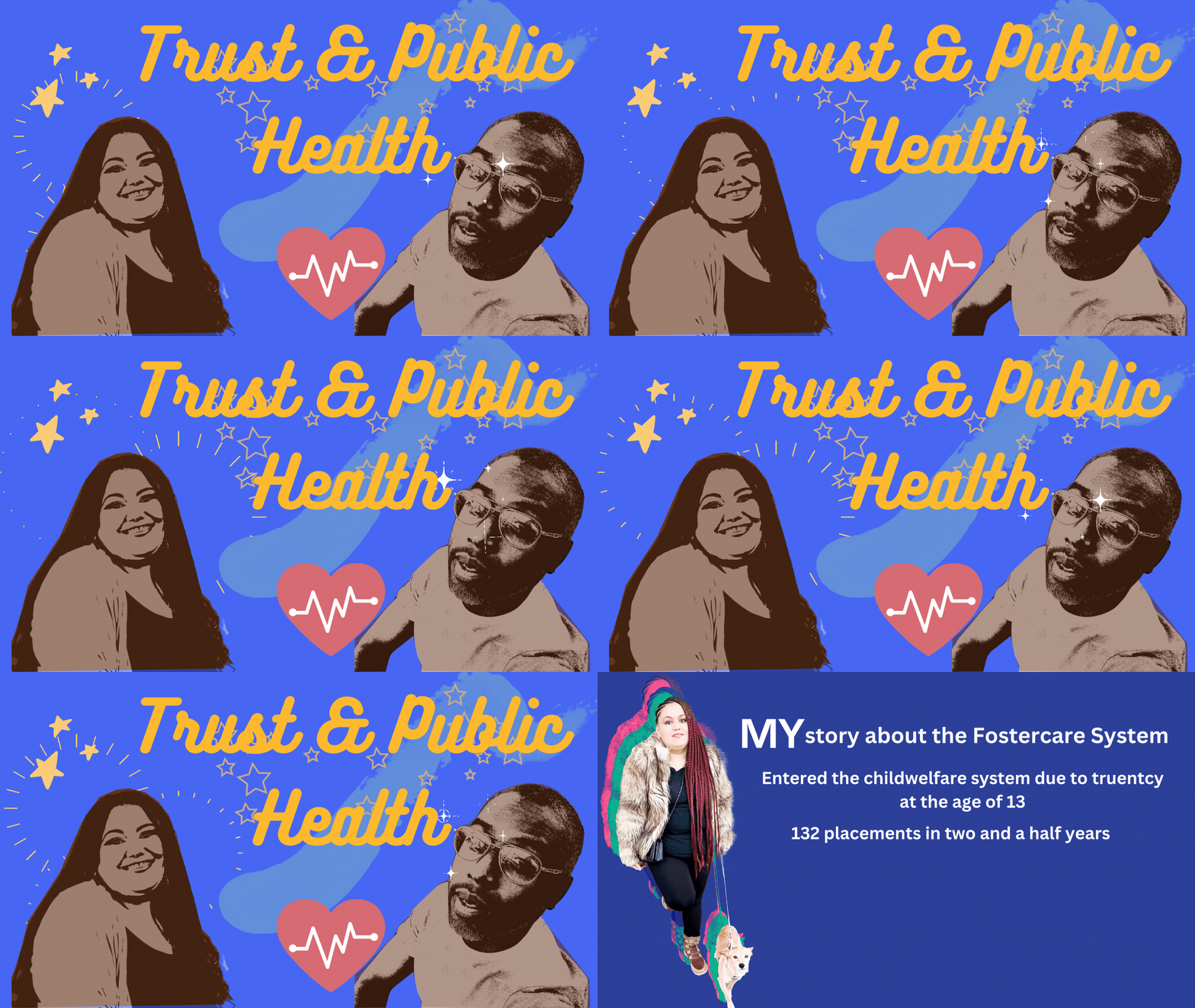
Marcella spent two and a half years in the child welfare system, entering at the age of 12 and returning home at 16 years old. She states that she initially entered the system, and was effectively removed from her home, due to truancy. There are approximately 391,000 children living in foster care in the U.S.
During those two and a half years spent in foster care, she had 132 placements, which didn’t offer her any sort of stability. So, she would frequently run away or escape custody. Because of her tendency to run away, Marcella was classified as “Therapeutic”. This new classification meant that foster parents would receive twice the standard payment for providing her a home
According to the National Conference of State Legislature, 80% of youth in foster care experience serious mental illness compared to 18-22% of children in the broader population. Mental health has been identified as the largest unmet need among this population, due either to the circumstances that caused them to be removed from their home or the conditions they experience after entering foster care.
She says the foster care system often fails to fully vet foster parents, which can endanger children. She uses her own experience as an example, saying that her first time in a “trap house,” a neighborhood home used exclusively for drug trade, “I was brought there by my foster parent.” The reason for the lax standards reflects in large part the shortage of adults nationwide willing to serve as foster parents, particularly for youth in need. Turnover among foster parents rivals that of the fast food industry, at 30-50%. Foster parents often note they feel unsupported by the care services in caring for the children placed in their care, while often fearing being criminalized by due to arbitrary complaints and allegations of abuse.
According to the National Conference of State Legislature, 80% of youth in foster care experience serious mental illness compared to 18-22% of children in the broader population. Mental health has been identified as the largest unmet need among this population, due either to the circumstances that caused them to be removed from their home or the conditions they experience after entering foster care. An estimated 22% of youth in the foster system have post-traumatic stress disorder, compared to 4.5% of all adults, which can have lifelong impacts on their health, ability to build and maintain solid relationships, and fulfill their potential academically and in the workplace.
Marcella, like many children in the foster care system, received extensive psychotherapy treatment. “Whenever a new drug came out, they would have me take it,” she recalls. “I was put on so many different medications, and received so many diagnoses that they really didn’t have an official diagnosis for me at one point.”
An estimated 13-52% of youth in foster care are prescribed medication, compared to just 4% of youth outside the system. Yet, only one in three youth in foster care receive proper oversight of their psychotherapy treatment. The vast majority of foster children go without adequate resources to address their mental health needs, which can itself can be traumatizing. Marcella says her experiences have contributed to life-long challenges with trusting medical institutions, and any kind of drug therapy. She explains, “To this day, I get anxiety about taking my anxiety medications.”
I learned a lot from my conversation with Marcella. I had never considered the health disparities faced by youth in foster care before speaking with her. Listening to her story, I suddenly thought of all the times that foster care has been offered as a viable alternative to abortion.
I even mentioned this idea to Marcella, to which she simply answers, “No.” She has personal religious feelings about undergoing an abortion herself, but states that she would never send her children into the system.
According to my research, children in foster care need access to trauma-informed healthcare and mental health services. They also would benefit from a medical home, which refers to coordinated medical services focused on creating safe spaces and high-quality, patient-centered health care. Such an approach to ensure children at least have a stable relationship with a healthcare provider. Even if their living conditions cannot improve quickly, maybe their quality of care can.
I would like to offer a special thank you to Marcella, for agreeing to share her story. She has much to learn about advocacy and social justice, but she has plenty of time to grow. My hope is that her story might help to raise awareness and inspire other youth and foster care and foster care alumni to speak up for this important population. Marcella’s resilience and the resilience of people like her is a great inspiration to me as a public health professional and community organizer.
The mission of the Boston Congress of Public Health Thought Leadership for Public Health Fellowship (BCPH Fellowship) seeks to:
It is guided by an overall vision to provide a platform, training, and support network for the next generation of public health thought leaders and public scholars to explore and grow their voice.